How to play
Seat every guest on the list so that every guest is happy. There is always exactly one way, and you can always find it by logic.
The board
- The number beside each row and above each column is how many guests sit in it.
- The guest list under the board says who is coming. Every guest on it gets exactly one seat.
- Guests already printed on the board are fixed; they count towards the numbers and the list.
- A guest's neighbours are the up to eight cells around it, diagonals included. Any guest counts as a neighbour, special guests too.
The guests
Special guests (everyone after the Partygoer) follow only their own rule; the neighbour counts don't apply to them.
-

-
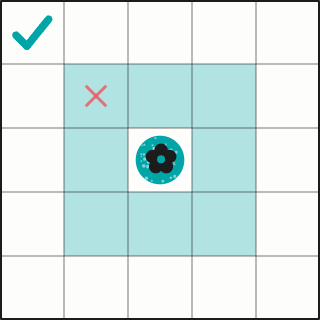
No neighbors at all.
-

-
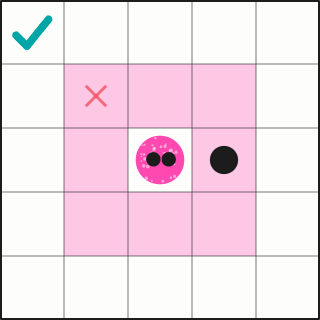
Exactly 1 neighbor.
-

-
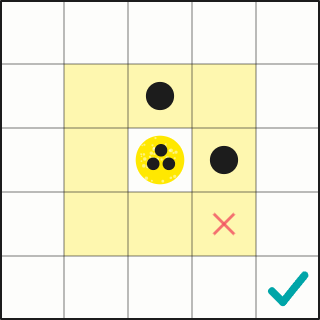
Exactly 2 neighbors.
-

-
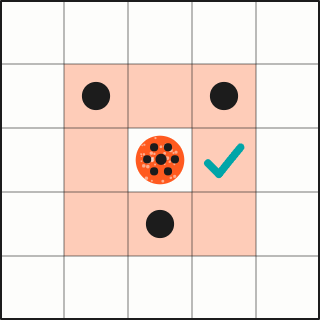
3 or more neighbors.
-

-
No other piece in its row or column.
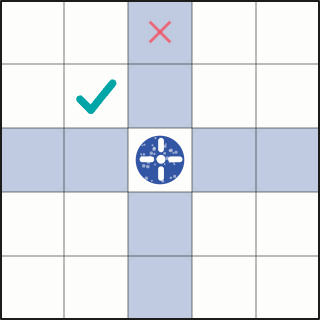
-

-
No other piece on its diagonals.
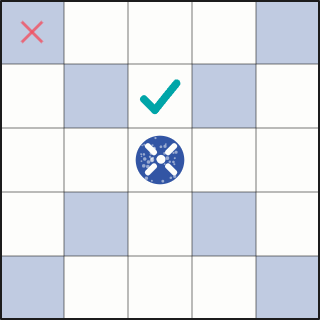
-

-
No piece a knight's move away.
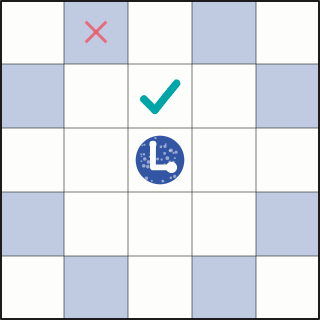
-

-
Stands on the edge of the board.
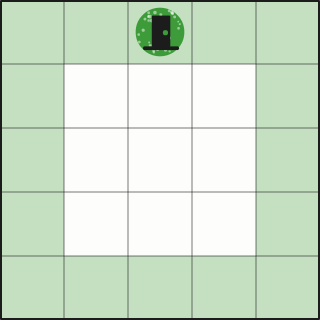
-

-
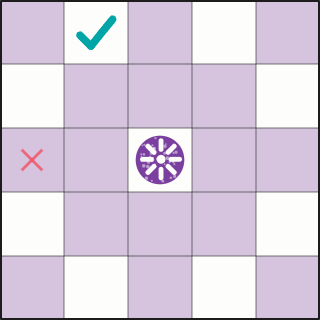
No other piece in its row, column or diagonals.
-

-
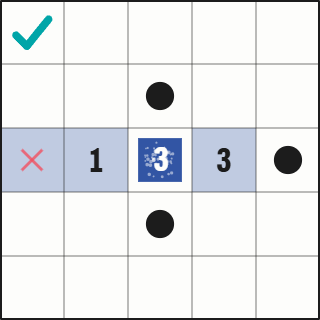
Counting up, down, left and right, sees exactly as many empty cells as its number before a piece or the edge.
-

-
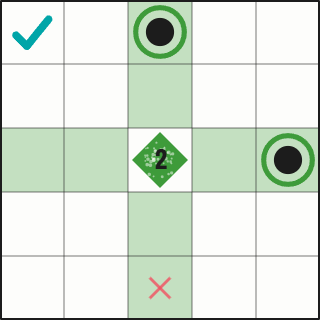
Sees a piece in exactly as many of the 4 directions as its number; the other directions run to the edge.
-

-
Happy anywhere.
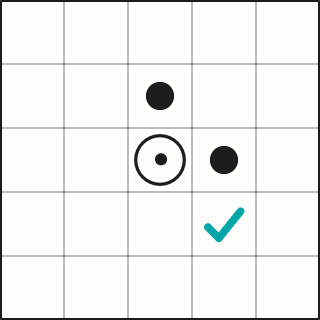


In the diagrams, ✓ means another guest may sit there, ✗ means a guest there breaks the rule, dots are other guests and shading shows what the guest looks at.
Tools
- Place: pick a guest from the list, then tap a cell. Tap again to clear it.
- Cross out: long-press (or right-click) a cell to mark it empty. Drag across a line to mark several cells at once.
- Notes: turn on Notes to pencil in the guests a cell might hold.
- Hint explains the next deduction; Check looks for mistakes.